From Mill Floor to National Stage
Born on 13 September 1879 in Springhead, on the outskirts of Oldham, Ann "Annie" Kenney emerged from the cotton mills of Lancashire to become one of the most influential figures in the British suffragette movement. She was the only working-class woman to reach the senior hierarchy of the Women's Social and Political Union (WSPU), transforming herself from a mill girl working twelve-hour shifts into a national organiser who helped shape the tactics of militant suffrage activism.
Early Life at Lees Brook Mill
Annie was the fourth of twelve children born to Horatio Nelson Kenney and Anne Wood. Her father, who worked in the textile industry, reportedly had "very little confidence in his children". It was her mother who fostered an environment of intellectual curiosity, encouraging reading, debating, and socialist ideas whilst allowing "great freedom of expression on all subjects".
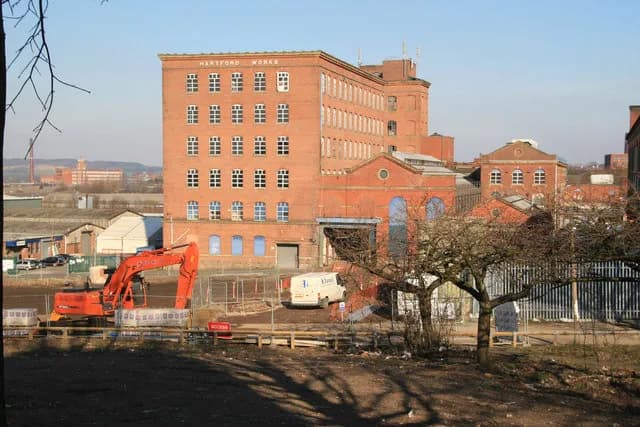
The realities of working-class life in Oldham meant Annie began part-time work at Lees Brook Mill (also known as Leesfield Mill) at the age of ten. By thirteen, she was working full-time as a weaver's assistant or "tenter", putting in eleven- to twelve-hour shifts from six o'clock in the morning. During her fifteen years at the mill, she suffered a serious industrial accident when one finger was torn off by a spinning bobbin.
Despite the gruelling conditions, Annie promoted the study of literature amongst her colleagues and became involved in trade union activities. She was inspired by Robert Blatchford's socialist newspaper The Clarion and remained a regular church attender, singing in the local choir.
The Clarion Vocal Club Meeting That Changed Everything
In 1905, Annie attended a meeting of the Oldham socialist Clarion Vocal Club where she heard Christabel Pankhurst and Teresa Billington-Greig speak. Billington's approach was, by Annie's own account, "a sledgehammer of cold logic and reason", but it was Christabel Pankhurst who captured her imagination. A week later, Annie met Emmeline Pankhurst and later wrote that she felt "a great change had come".
She began handing out WSPU leaflets to women workers in Oldham mills alongside her sister Jessie. Her commitment to the cause was immediate and absolute.
The Free Trade Hall Confrontation
On 13 October 1905, Annie and Christabel Pankhurst interrupted a Liberal Party rally at Manchester's Free Trade Hall. They approached Winston Churchill, then MP for Oldham, and Sir Edward Grey to ask a simple question: "Will the Liberal government give votes to women?"
When their question was ignored, the pair unfurled a "Votes for Women" banner. They were arrested for obstruction and technical assault after Christabel allegedly spat at a policeman. Annie was imprisoned for three days; Christabel for a week. This incident marked the beginning of the WSPU's militant tactics and brought national attention to the suffrage campaign.
A Career of Imprisonment and Resistance
Annie's activism came at enormous personal cost. She was imprisoned thirteen times over the course of her campaigning. In 1906, she was arrested alongside Adelaide Knight and Mrs Sbarborough whilst attempting to meet Chancellor H. H. Asquith, choosing prison over giving up her campaigning rights.
By 1907, she had been appointed WSPU organiser for the West of England, based in Bristol, on a salary of £2 per week. She organised the 1911 census boycott in the city and, in 1912, became the WSPU's deputy; the only working-class woman to hold such a senior position. When Christabel Pankhurst fled to France in 1912, Annie was put in charge of WSPU operations in London, travelling weekly to Paris to receive orders.
In 1913, she was charged with "incitement to riot" at the Old Bailey and sentenced to eighteen months at Maidstone Prison. She went on hunger strike and became the first suffragette released under the Prisoners (Temporary Discharge for Ill Health) Act 1913, commonly known as the "Cat and Mouse Act". She endured force-feeding on multiple occasions and was awarded the WSPU's Hunger Strike Medal "for Valour". In April 1913, The Times reported that Annie had been brought to a meeting at Knightsbridge Town Hall on a stretcher, "covered with blankets", following her release under the Act.
The Pankhurst Connection
Annie's relationship with the Pankhursts was central to her work. Emmeline Pankhurst called her "a truly remarkable Oldham woman" and said: "There was something about Annie that touched my heart." Emmeline Pethick-Lawrence described Annie's devotion to Christabel as "unquestioning faith and absolute obedience". Annie worked alongside Sylvia Pankhurst in London, and her sister Jessie became private secretary to Emmeline Pethick-Lawrence.
Dressed in clogs and a shawl to appeal to working women, Annie bridged the gap between the largely middle-class WSPU leadership and the mill workers she had left behind in Oldham.
Life After the Vote
Following the Representation of the People Act 1918, which granted voting rights to certain women, Annie withdrew from political life. In April 1920, she married James Taylor at St Cuthbert's Church and settled in Letchworth, Hertfordshire. Their son, Warwick Kenney Taylor, was born in February 1921.
In 1924, she published her autobiography, Memories of a Militant. She died on 9 July 1953 at Lister Hospital in Hitchin from diabetes, aged 73. Her ashes were scattered on Saddleworth Moor, bringing her back to the landscape of her youth.
Oldham's Enduring Memorial
Oldham has not forgotten its remarkable daughter. In 1999, Oldham Council erected a blue plaque at Lees Brook Mill, marking the site where a ten-year-old girl began a working life that would lead to the corridors of power.
On 14 December 2018, the centenary of the 1918 Representation of the People Act, a bronze statue of Annie was unveiled outside Oldham Town Hall. Sculpted by Denise Dutton and funded by public subscription, the statue depicts Annie wearing a "Votes for Women" sash and ringing a bell. The campaign raised £24,000 from local residents and supporters.
In 2018, Annie's name was also etched on the plinth of the Millicent Fawcett statue in Parliament Square, London, ensuring her place amongst the architects of women's suffrage. Her statue outside Oldham Town Hall remains a focal point for remembrance; four years after its unveiling, locals were still leaving flowers at its feet.
What Is Confirmed
- Annie Kenney was born on 13 September 1879 in Springhead and died on 9 July 1953.
- She worked at Lees Brook Mill from age ten, losing a finger in an industrial accident.
- She was imprisoned thirteen times and was the first suffragette released under the Cat and Mouse Act.
- A blue plaque was erected at Lees Brook Mill in 1999, and a statue was unveiled outside Oldham Town Hall in 2018.
What Is Unclear
- Whether her diabetes was linked to the long-term health effects of hunger striking and force-feeding.
- The exact mill conditions at Lees Brook Mill during her employment there.